In the hills of Saint-Paul-de-Vence, about 30 minutes from Nice, there’s a small hotel called La Colombe d’Or. From the outside it looks like any other old Provençal building, yellow stone walls, vines, a wooden gate.
Walk inside and you’re looking at one of the most valuable private art collections in the world, hanging casually above dining tables and along whitewashed corridors, placed there because the talented people who painted them had no cash on them.

It started in 1920 when Paul Roux, the son of a local farmer, opened a small café bar called Chez Robinson, where people came to eat and dance on weekends. He and his wife Baptistine, known to everyone as Titine, had a talent for making people feel welcome, and Roux had a genuine interest in artists and their work. He expanded the café into a small inn with three rooms above the terrace. The sign above the door read: “Ici on loge à cheval, à pied ou en peinture,” which translates loosely as “here we lodge those on foot, on horseback, or those with paintings.”
Through the 1930s and particularly during the Second World War, when the south of France became a refuge for artists fleeing occupied Paris, La Colombe d’Or became the place they gathered. Money was short and the arrangement was simple: if you couldn’t pay your bill, a painting would do. Roux accepted without hesitation, partly because he believed in the work and partly because he considered these people friends. The result, over several decades, was a collection that no museum budget could have assembled, because nobody was buying at market rate. They were settling tabs.
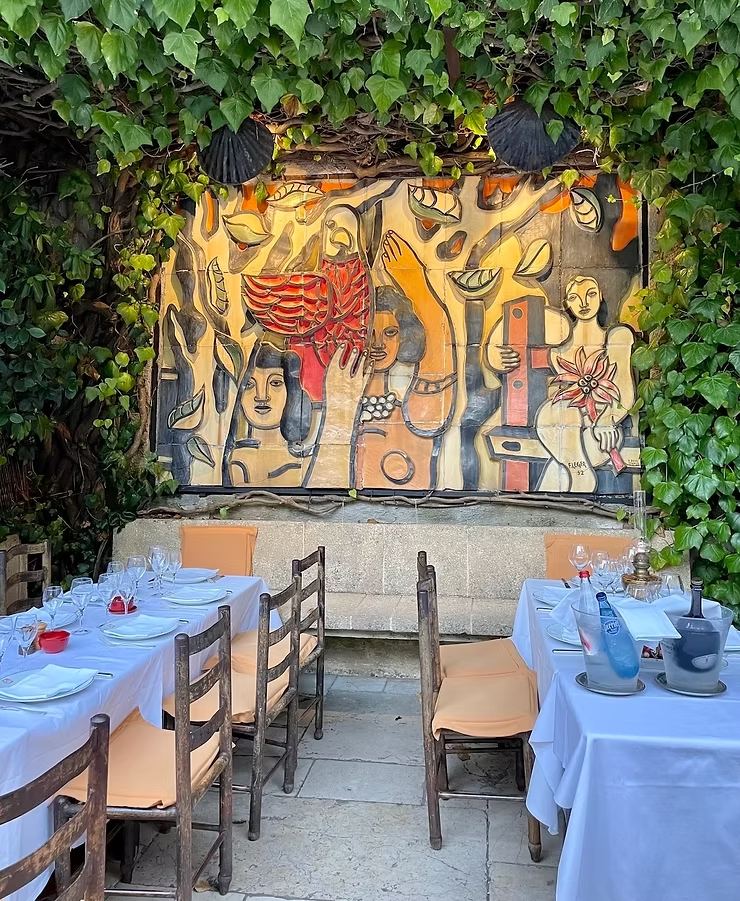

Picasso came regularly and left behind ceramics and paintings. Henri Matisse, who was living nearby in Nice, would have his chauffeur drive him to the hotel to take tea with Roux in his car, parked outside the gate. Marc Chagall, who eventually made Saint-Paul-de-Vence his home and is buried in the village cemetery, contributed pieces that still hang in the dining room. Fernand Léger made a mosaic specifically for the terrace. Alexander Calder installed a mobile by the pool, which Roux later had painted red because it was white against a white wall and nobody could see it properly. Calder came back to find it and reportedly asked what happened. Roux explained. The mobile stayed red.
Jean-Paul Sartre came with Simone de Beauvoir. Yves Montand married Simone Signoret here in 1951. Francis Bacon, Braque, Kandinsky, Miró and dozens of others passed through at various points, leaving work behind or having it bought outright by Roux, who had developed enough of an eye to know what was worth keeping.
In 1953, when Roux was ill and the family realised they had no work by Picasso despite years of friendship, his wife Titine went directly to Picasso’s studio. She told him his good friend was dying and that they didn’t have a single piece of his work. She came back with three paintings. One still hangs in the hotel today.

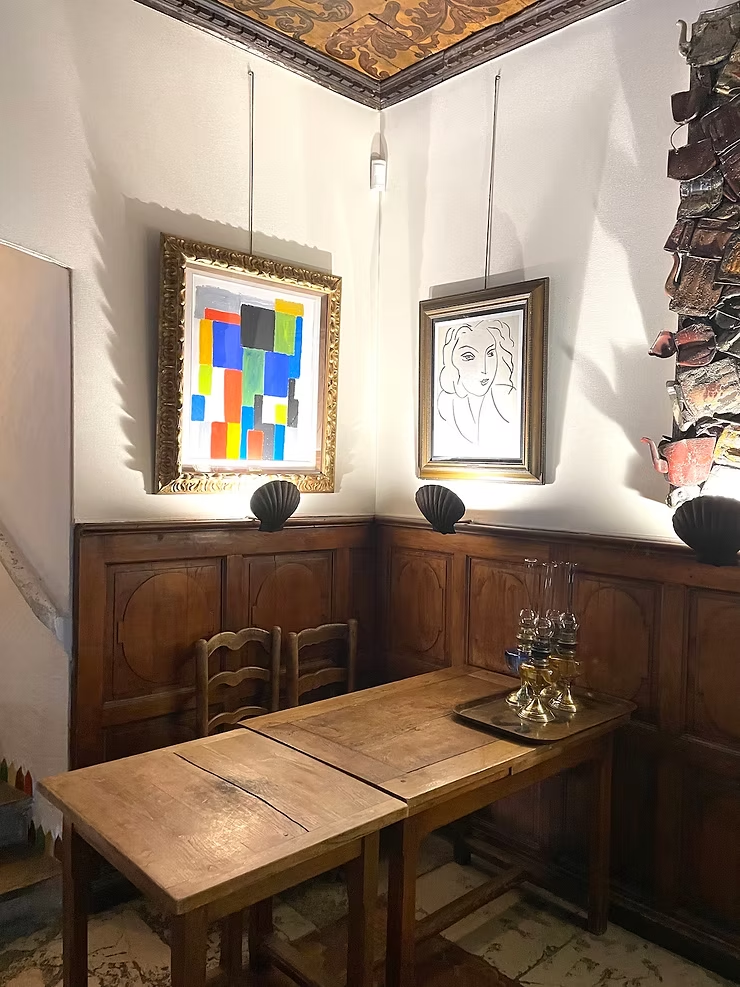
The collection has never been valued publicly and the family doesn’t discuss insurance. The third generation, Daniele Roux, who runs the hotel now, says the artworks are simply part of the house. “We don’t think of it anymore,” she told CNN. “But you can’t touch them, because the alarm system is so strong.”
In the 1960s, several pieces were stolen from the dining room. They were recovered a year later at a train station in Marseille. When Chagall heard about the theft, his response was that the thieves had left his work behind, which he found personally offensive. “I’m a big-time artist,” he apparently said. “Why are you not stealing my paintings too?”
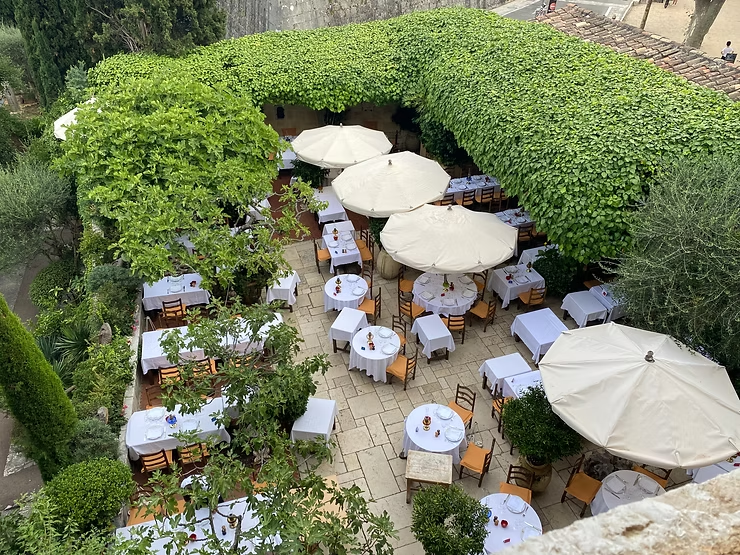
The hotel today has 25 rooms, a restaurant, a pool and a terrace shaded by fig trees, and it operates in much the same way it always has, family run, no fuss, no lobby bar with a DJ. You eat lunch outside in summer and by the fire in winter. The food is simple Provençal cooking. The wine list is long. The art is everywhere, and none of it is labelled, because the assumption is that if you’re there, you already know what you’re looking at or you’ll find out.
Reservations are required to access the collection, either for a meal or a room. You can’t just walk in off the street. It’s that kind of place.