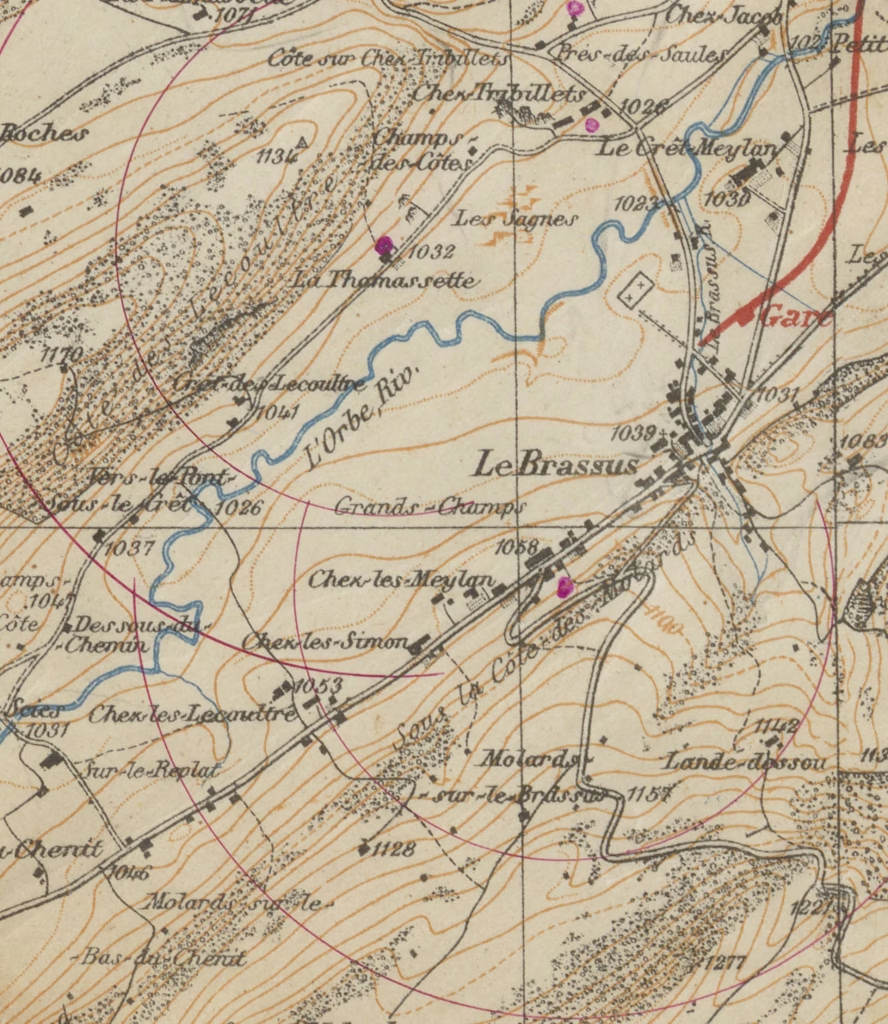
Tucked deep in the Vallée de Joux, a small Swiss village called Le Brassus has quietly shaped the world of fine watchmaking for more than a century.
It’s here, in 1875, that two young craftsmen, Jules Louis Audemars and Edward Auguste Piguet, joined forces to build a business rooted in high quality craftsmanship, a philosophy that still defines Audemars Piguet so well today.
Le Brassus was an ideal birthplace for a watchmaker. The Jura Mountains north of Geneva were filled with resources like iron ore and a population skilled in detailed mechanical work.
When farming slowed during the long winters of the 18th and 19th centuries, locals turned their homes into small workshops. Over time, a tight network of artisans formed, each specialising in parts like escapements, cases, and dials. Together, they laid the groundwork for what would become the Swiss watchmaking capital.
Audemars and Piguet were products of that environment. Audemars designed and built movements, while Piguet focused on regulating and finishing them. Their collaboration allowed them to create complete watches of remarkable complexity, often supplying finished movements to other luxury houses. By the early 20th century, Audemars Piguet had built a reputation for innovation, crafting some of the first minute repeaters, perpetual calendars, and chronographs ever made.
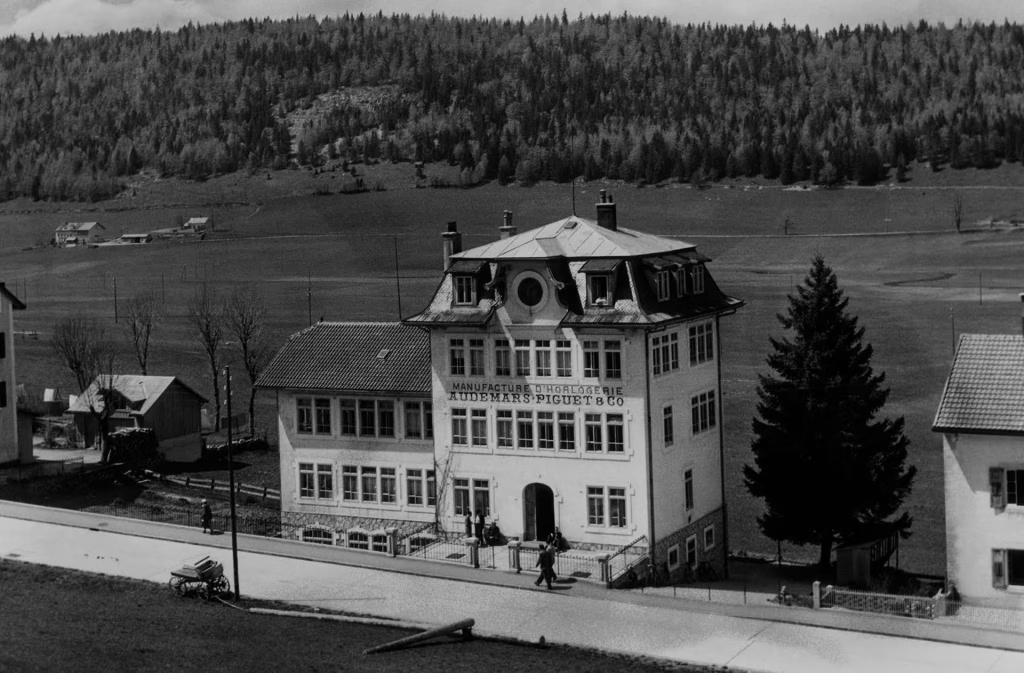
The company’s oldest building, constructed in 1868, became both a home and a workshop for the founders. By 1907, the first dedicated production atelier was complete. As orders increased, Audemars Piguet expanded throughout Le Brassus and nearby towns like Le Locle and Meyrin. Despite the growth, production stayed deliberately small. Each piece was still built and finished by hand, a philosophy that has kept the brand’s quality and exclusivity intact for over 150 years.
Through two world wars and several recessions, Audemars Piguet never compromised its independence. It remains the oldest Swiss manufacturer still owned by its founding families. As Vice Chairman Olivier Audemars once said, “Audemars Piguet is more than a company. It remains independent and family-owned, responsible for the transmission of knowledge and know-how to the future generations. Here in Le Brassus, where it all started in 1875.”
The modern era of Audemars Piguet began in 1972, when designer Gérald Genta introduced the Royal Oak, a fairly bold, stainless-steel sports watch that broke every convention in luxury horology. With its octagonal bezel and exposed screws, it was unlike anything else on the market. Many thought the idea of a high-end steel watch was absurd, but the Royal Oak quickly became a cultural icon. Its integrated bracelet, slim case, and tapisserie dial helped define what a luxury sports watch could be.
The Royal Oak not only saved the company during the quartz crisis of the 1970s, it redefined modern watch design. Subsequent models like the Royal Oak Offshore in 1993 pushed the limits even further with larger cases and bolder aesthetics, setting a trend that shaped the entire industry for decades.

1st Generation
Jules Louis Audemars | Edward Auguste Piguet

2nd Generation
Paul Louis Audemars | Paul Edward Piguet

3rd Generation
Jacques Louis Audemars | Paulette Piguet
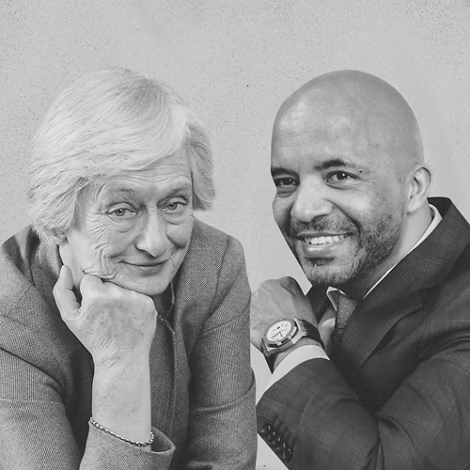
4th Generation
Jasmine Audemars | Oliver Frank Edward Audemars
In recent years, Audemars Piguet has continued to expand its reach while staying close to its roots. The brand’s museum and workshop complex in Le Brassus, known as the Musée Atelier, showcases both heritage and innovation under one roof. The architecture mirrors the brand itself — a spiral of glass and brass that wraps around the original 19th-century building where it all began.
The company’s approach remains unchanged: blend tradition with experimentation. New releases like the Code 11.59 collection have sparked debate but also reaffirmed AP’s willingness to take risks, just as it did with the Royal Oak fifty years ago. The brand still limits production, ensuring each piece reflects the same attention to craft that Jules Audemars and Edward Piguet demanded in their small workshop.
After more than a century, the spirit of Le Brassus lives on in every watch that bears the Audemars Piguet name.